Pinterest

Showing posts with label teacherspayteachers. Show all posts

Monday, December 7, 2015

Let's Talk Politics...

In 8th grade U.S. History, we dive into the U.S. government and all of the ins and outs of how to comprehend how our government system works. No this is not easy. I will say that students do tend to have many questions on the topics, which makes the process more interactive. 

government also seems to be a topic that many students are able to relate to due to the fact that they hear lots of information outside of school about politics. We had a to make a rule in our class:
If you don't research it, you don't talk about it. 

Instructing the concept of how the government works in our country is a huge undertaking for teachers. Here are a couple of tools I have found to be helpful. 

First, one of the best websites out there on government is icivics. Click on the link to go directly to the website. They have teacher tools, students worksheets, and even games for the students to play to practice their skills. 

When you first get to the site, this is what you should see:

You can choose from here if you would like to check out the games fir the students to play or the teaching tools. Both very beneficial. 

As thr students play the game, you will here lots of commentary. 'Oh Man' 'You want what kind of law?' 'They want to go to war again!'

Very fun for the teacher. 

The next day, I had my students complete the following graphic organizer. 


When following the link below, you will also find a Constitution Summative Study Guide as well as a Branches of Government short quiz. 


These products will give your students the opportunity to practice skills and give the teacher an opportunity to see what concepts should re-taught or have reached mastery.
Have fun with government!
Enjoy,
Emily 

Monday, November 16, 2015

Compound Sentences? The difficult delivery of sentence structure...

As I try to remember back to a classroom memory were I learned the structure of a compound, complex, compound-complex sentence...I can't. Although this seems to be a habit that my teachers ingrained when I was much younger, I am now able to see how difficult the concept can be to get across. One format used in many schools for compound sentences are the FANBOYS. These conjunctions in the FANBOYS format are very easy for students to remember. They are able to check their sentences, and eventually able to think in the compound format. 

Below you will find links to the Essential Edification TpT store for powerpoint, student, and teacher documents for the FANBOYS lesson. 


This product uses videos from Flocabulary (You will need an account to view this video) and School House Rock. Providing the information to many different learning styles is always a blessing when teaching a difficult concept. Flocabulary is a wonderful resource for many students because it provides information a format that will stick with students and allow them to repeat the information through the music. Students also enjoy the the presentation Flocabulary provides. 

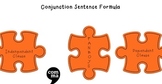
Another way of presentation that the FANBOYS Mini-Lessons is visual. Making a visual of what the sentence structure should look like can create a picture in the student's minds. Take a look...

FANBOYS format gives a really great delivery for teachers and a lot of options for comprehension for the students. 

Enjoy, 

Emily 


Wednesday, November 11, 2015

A day to say thanks...

Veteran's Day is one that is very important to our country and a day that we try to express the importance of to our students. In the middle school, there are students who have many different views of the day and understand the meaning, but they are not always sure how to express their feelings on the topic. The Veteran's Day Mini Lesson is a way for students to express their thoughts through a discussion and individually in their letter to a veteran. 


Each year our school puts on a large Veteran's Day assembly, inviting many Veteran's to celebrate. It is very meaningful to both the Veteran's and the students. It is always a powerful presentation of the recognition of the men and women who have fought for our country. I encourage others to look at what your classes can do to pay their respects to military members while still utilizing skills they are working on in class. A few examples: writing Christmas Cards to service members through the red cross, creating care packages with thank you letters, write letters to veterans living in the near by VA's, etc. 


Enjoy the mini-lesson for this important day!

Emily 

Saturday, November 7, 2015

Character Education Lessons

As we continue down the journey of creating a school with Multi-Tiers of Intervention, students best interest is, of course, at the heart of all of the many changes. We have transitioned our 'Academic Lab' time to a 45 minuter class period twice per week. This had made a tremendous that opportunity to provide some very important and needed interventions during the school day. When sharing this change with the staff and even colleagues from other schools, we were met with the same question time and time again. "What are the students who do not need intervention during to do during this time?" This is a difficult question to answer, especially at the beginning of such a big transition for our building. While the hope is to eventually offer extension lessons specific to student interest, the focus has become to use the time for students who do not require intense intervention to experience future planning skills as well as character education lessons. A great foundation for our middle school students as they begin the decision making process for the rest of our lives. 

Below are a couple of the lessons created for character education purposes during Academic Lab:

The Kindness Boomerang:
This lesson focuses on the simple act of kindness. The lesson was created around a video that has been circling the internet showing small acts of kindness passed from one individual to another. The lesson includes an brainstorming time for students to determine acts of kindness they can perform for others in their daily lives and scenarios of social situations that allow students to determine ways to show kindness. Even my 8th grade students found this lesson intriguing and worth their time!


Click the link to go to the Essential Edification TpT store for the Kindness Boomerang Character Education Lesson. 


Our Digital Footprint:
This lesson focuses on the fact that all actions in the world of technology can never be erased. Especially in the secondary schools, but also in the elementary schools, the use of technology is a topic of conversation that should be taken very seriously. This lesson allows students to think about their use of technology and how it effects the friendships, relationships, families, and even their very bright futures. This lesson forces students to ask themselves, "What digital footprint are you leaving?"


          Click the link to go to the Essential Edification TpT store for the Digital                                   Footprint Character Education Lesson. 

                                              Our Digital Footprint 


Thank you so much for stopping by, 
Emily 

Creating a Data-Based Essential Skills Classroom


The definition of an Essential Skills classroom is a classroom based on a student focused curriculum in the areas pf functional life skills. The Essential Skills classroom is one that identifies the needs for students with severe disabilities that impact their daily life and education. Data collection is the single most important form of information gathered during instruction. 


When I started in the Essential Skills classroom, my experience was from the ground up. I was a single teacher in a classroom of 13 students with significant disabilities, and I had 9 capable Para-Educators in my classroom. I was lucky to have the capable and experience Para-Educators on my side, but building a data based classroom where data was not previously used, is a large project. Deciding how to create your data protocol takes time, and it is also beneficial to have baseline completed when beginning the structure.  

Take a look at some of the tips below:


Setting Up Data Binders - Essential Skills 

                Data Collection is a teacher’s best tool when monitoring student progress, concept mastery, and retention.  To create a fluid system in the classroom, teachers need to think about their population, environment, and structure.  Teachers in an Essential Skills (Low Incidence, Cross-Catagorical) classroom have an enormous about of data to keep track of and continually monitor. The following system of creating a Data Binder will encourage an organizational system for all areas addressed in the Essential Skills classroom. 

Take a look at the teacher’s pre-work to create skills concepts:

1.       Identify all student goals. Breakdown the goals into individual concepts and order them according to their foundational skills. (i.e. single digit addition before double digit addition)

2.       Create data sheets that will address the concepts you have identified. 

a.       Note: As you are completing diagnostics and learning the student’s skills, you may discover additional concepts. Create a data sheet for those concepts as well. 

3.       Identify how you will address and teach those concepts. 

a.       Utilizing Task Boxes, computer programs, and direction instruction. 

4.       Create your binder!

This process builds as you work with your students. The binder is a working document through the time of instruction.  It is important for the teacher to organize a system of implementation for the concepts as well. Due to the fact that the Essential Skills classroom engages students of multiple disabilities and learning levels, it is important to have a systematic, organized instruction structure in place. This structure should include practice of the routines with prompting and needed and quickly faded.  The sample structure below gives teachers an organized plan for instruction of multiple levels of learning at one time, while also giving students as much independence as possible when working on the concept isolated for them. 

The first piece includes determining when and how you will instruction on the concepts. For the ParaEducators, it is important to give them an idea of the concepts for the student as well; especially since there implementation of the instruction is usually consistent with the students in which they are assigned.  

Example of student’s instruction breakdowns for the week would go in the front of the student binder for easy access for staff members working with that student. The concepts listed in the boxes above are those identified by the teacher through IEP goals and diagnostic tools. In the Essential Skills classrooms the concepts are foundational building blocks that build upon one another, therefore the skills will not often change. 


 Bell Ringers – A Bell Ringer is an activity that the students will participate in at they enter the classroom. (as the bell is ringing and time to change activities is approaching) This is an activity that can give the students some independence in their learning. However, completing a Bell Ringer and the routine of doing so must be taught. For more information on Bell Ringers in the Essential Skills Classroom, click the link. 

Behind the Bell Ringers are where the data sheets are stored. It is important to share your organization structure of the data binders with all staff who will be working with them for fluidity. 


Mathematics (red)

Addition Single Digit 

Double Digit

(Multi-Digit – re-grouping/decimal)

Subtraction (Multi-Digit – re-grouping/decimal


  SAME

Money (add./sub., like/unlike, $/coins)

                Rounding to the next dollar 

Time – Time to the hour

                Time to the half hour

                Time to the 15 minute intervals

                Time to the minute

Elapsed -to the hour

                  To the half hour

                  To the 15 minute intervals

Measurement - inch and half inch

            Measuring Cups


         Thermometer

Calculator (+/-/x/÷)

Multiplication – single digit 

Word Problems (one-step, two-step)

Communication Arts (green)

Reading Fluency

Reading Comprehension

Capitalization 

Ending Punctuation

Independent Writing Skills

Edmark Packet – if used 

*Dolch Words should be paper clipped and put into the Old Data Form 

Benchmarks (purple)

Reading A-Z Benchmark Sheets – used to move student to the next reading level

Social/Life Skills (blue)

Nutritional Facts 

Environmental Sight Words 

Fire Drill Completion

Following Directions

Maintenance pages (orange)

These pages list concepts that have been mastered by the student. The concepts are checked weekly for retention. 

Old Data Pages (yellow)


  The Data Binder – Essential Skills Table of Contents

The sample Data Binder Table of Contents includes some of the concepts that may identified for students in the Essential Skills classroom. Not all students would have the same concepts on data sheets in their binders.  Additionally the concepts themselves would be specific to the needs of that particular student. For example, while one student may have writing a simple sentence as his independent writing data sheet concept, another in the same class may have writing his name as his independent writing data sheet concept. This is an example of how the process truly is individualized. 

As you thinking about your students, their needs, and beginning to set up your binders, take a look at the pictures below as examples for creating a classroom environment conducive for the individualized, data-driven classroom.


The Boxes included the student’s Data Binder and manipulatives they may need to complete the data-driven concepts. The students take these binders with them to each location in which they would work. 


The Station Cards tell the students exactly what their tasks are for that class period. This serves as a reminder for routine, while giving the students monitored independence in their schedule. The cards include Bell Ringer (which all students complete with in the first 5-7 minutes of the class period), teacher and Paras names, computer program names, etc. 


The front end work of setting up this systematic approach for both the Data Binders and the classroom routine and organization will not only save the teacher time, but will also provide appropriate and on target reports for students skills and levels of mastery. 

Please comment below with additional questions and ideas! Let us know what works best for you in the Essential Skills setting.

Emily 

Follow this link to Essential Edification's TpT store to download data sheets!

Essential Edification TpT